If you’re curious whether faster cooking means less nutrition, you’re not alone.
Modern kitchens are full of time-saving gadgets, but many home cooks still wonder: are we trading health for speed? This is especially true when it comes to pressure cooking nutrition—a topic surrounded by myths and half-truths.
Here’s what you actually need to know: pressure cooking doesn’t just save time, it may help preserve key nutrients and improve food digestibility in ways traditional methods can’t.
In this article, we’ll break down the real science behind pressure cooking nutrition. You’ll learn how it affects vitamins and minerals, how it minimizes harmful compounds, and what that all means for your everyday meals.
We’ve grounded this guide in nutritional research and real-world culinary testing, so you can skip the guesswork and cook smarter, not just faster.
How Pressure Cooking Works its Nutritional Magic
By understanding the science behind pressure cooking and its ability to lock in nutrients, you can transform your meals into powerhouse dishes, making them a perfect complement to the ideas in our ‘Fhthrecipe Healthy Snack Guide From Fromhungertohope.’
Let’s talk kitchen physics—specifically, why pressure cooking leaves your veggies more vitamin-packed than traditional boiling (or even steaming, surprisingly).
Classic boiling? It heats to 212°F (100°C) and often leaves nutrients swimming in the water (and eventually down your drain). Steaming is gentler, but slower and still not sealed. Now enter pressure cooking: it seals everything in and pushes temperatures up to around 250°F (121°C), speeding up reactions.
That “speed + seal” combo means less oxygen exposure and shorter cook times—two notorious nutrient thieves. That’s the real secret behind pressure cooking nutrition: fast, hot, and sealed tight. (Think James Bond meets your soup.)
The Core Benefit: Superior Nutrient Retention
Let’s face it—how we cook our food matters just as much as what we cook. And when it comes to preserving nutrition, the difference between slow and fast cooking methods isn’t just about time. It’s about what stays on your plate—and what doesn’t.
Take boiling vs. pressure cooking. Boiling might seem like a gentle method, but it quietly drains vitamins right into the water (spoiler: you’re probably pouring those nutrients down the sink). Pressure cooking, on the other hand, dramatically shortens cooking time, which has a major bonus: it protects sensitive, water-soluble nutrients like Vitamin C, folate, and thiamin, all of which degrade quickly under prolonged heat.
Here’s how it plays out in real-life dishes:
- Broccoli and spinach retain their bold green color under pressure cooking—a visual cue that chlorophyll (and nutrients) are still intact.
- Root vegetables like carrots and beets come out vibrant and sweet without being waterlogged or stripped of minerals.
And it’s not just about vitamins. Thanks to minimal water use and high-seal cooking, essential minerals (like potassium and magnesium) and protective plant compounds (think antioxidants and glucosinolates) stay locked in the food.
Pro tip: For vegetables, especially leafy greens, shorter cooking at high pressure preserves texture and boosts flavor concentration.
So while slow cooking has its place (comfort food lovers, we see you), pressure cooking nutrition wins when nutrient retention is the goal. In the A vs. B of cooking methods—fast, sealed, and efficient clearly beats long, leaching, and nutrient-draining.
Reducing Unwanted Compounds in Your Food
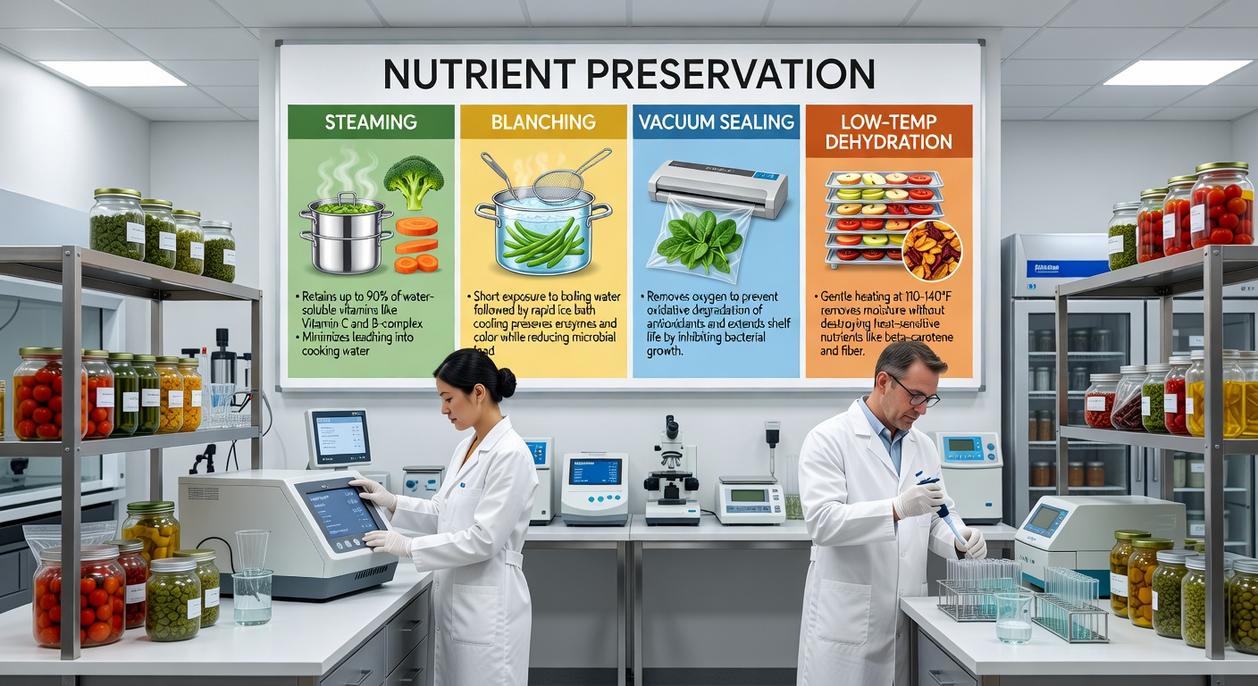
Let’s be honest—there’s a lot we think we know about food, but the science behind what happens during cooking? Still catching up in places.
Take acrylamide, for instance. It forms when starchy foods (think potatoes or bread) are cooked at high, dry temperatures—like in baking or frying. It’s considered a potential carcinogen by the WHO. But does that mean we should never enjoy crispy fries again? That’s unclear. What is clear is that pressure cooking nutrition science suggests moist-heat methods drastically reduce acrylamide formation. The sealed, steam-rich environment simply doesn’t let this compound thrive.
Now enter the world of lectins and phytic acid—two anti-nutrients found in beans, legumes, and grains that sound intimidating (and yes, they sometimes cause bloating). Critics of plant-based eating point fingers at these compounds, saying they block mineral absorption. And they’re kind of right. But here’s something often overlooked: pressure cooking neutralizes much of these anti-nutrients. No trendy soaking hacks needed—just a button press and steam.
Pro tip: When cooking chickpeas or kidney beans, pressure cook them instead of just simmering. It’s faster and gentler on your gut.
Science doesn’t have all the answers yet—but knowing how to reduce these compounds? That’s a smart place to start.
using molecular gastronomy to transform everyday dishes
Enhancing Digestibility for Better Gut Health
Ever feel sluggish or bloated after eating something that’s supposed to be healthy—like lentils or brown rice? You’re not alone. High-fiber foods and tough cuts of meat are great nutritionally, but they don’t always play nice with your gut.
That’s where pressure cooking nutrition makes a quiet yet powerful entrance.
Thanks to its high-pressure environment, a pressure cooker breaks down dense cellulose in legumes and whole grains (the stuff that usually makes your stomach work overtime) and softens connective tissue in meats without hours of slow roasting. The result? Easier digestion and better nutrient absorption.
It’s essentially a pre-digestion process that your gut will thank you for. Proteins become more bioavailable—meaning your body can absorb them more efficiently—and high-fiber foods become gentler, reducing bloating and discomfort (aka no more post-meal regret).
Pro tip: The same process also drives spices and herbs deep into the food, boosting flavor without drowning your dish in salt or fat. Think bold flavor, lighter feel.
Pressure Cooking vs. Other Methods: A Health Comparison
Let’s get something straight—not all cooking methods are created equal, especially when it comes to preserving the nutrients in your food.
Take boiling, for example. It’s a common technique, but research shows it can cause water-soluble vitamins like vitamin C and B to leach out into the cooking water (and who’s really sipping that leftover broccoli broth?). A study from the Journal of Food Science found that boiling can decrease vitamin C content by up to 50%.
Now, compare that to pressure cooking nutrition, which retains significantly more vitamins thanks to shorter cooking times and less exposure to oxygen. According to a 2009 study published in The Journal of Nutrition, pressure-cooked vegetables retained 90-95% of their nutrient content—far more than boiled ones.
Even steaming, which is often praised for gentleness, takes longer and isn’t as effective at neutralizing anti-nutrients like phytates in legumes and grains. Pressure cooking not only preserves nutrients but breaks down these compounds faster—key for anyone following a plant-based diet.
As for roasting and frying? Delicious, sure, but they carry a dark side. High-heat dry cooking methods are known to create acrylamides and AGEs—compounds linked to inflammation and chronic diseases (tasty, but at what cost?).
A Faster Path to Healthier Eating
We all want meals that are quick to prepare—but not at the cost of nutrition.
You’ve seen how pressure cooking nutrition changes the game: faster meals that actually support your health, not compromise it.
Until now, you might’ve thought healthy cooking meant long hours, bland results, or complicated prep. Not anymore.
Pressure cooking nutrition preserves more vitamins, minimizes unwanted compounds, and makes food easier to digest—all while locking in rich flavor and texture.
You came here looking for a faster way to eat better. Now you’ve found it.
Here’s your next move: Try a simple dish like pressure-cooked lentils or brown rice. You’ll taste the difference, and feel it too.
You’re not sacrificing health for time—you’re maximizing both. Start today, and let pressure cooking nutrition redefine what a fast, healthy meal really looks like.
 Andrea Malonecion writes the kind of modern cooking techniques content that people actually send to each other. Not because it's flashy or controversial, but because it's the sort of thing where you read it and immediately think of three people who need to see it. Andrea has a talent for identifying the questions that a lot of people have but haven't quite figured out how to articulate yet — and then answering them properly.
They covers a lot of ground: Modern Cooking Techniques, Tutorial Treasures, Ozvelex Fusion Cuisine Experiments, and plenty of adjacent territory that doesn't always get treated with the same seriousness. The consistency across all of it is a certain kind of respect for the reader. Andrea doesn't assume people are stupid, and they doesn't assume they know everything either. They writes for someone who is genuinely trying to figure something out — because that's usually who's actually reading. That assumption shapes everything from how they structures an explanation to how much background they includes before getting to the point.
Beyond the practical stuff, there's something in Andrea's writing that reflects a real investment in the subject — not performed enthusiasm, but the kind of sustained interest that produces insight over time. They has been paying attention to modern cooking techniques long enough that they notices things a more casual observer would miss. That depth shows up in the work in ways that are hard to fake.
Andrea Malonecion writes the kind of modern cooking techniques content that people actually send to each other. Not because it's flashy or controversial, but because it's the sort of thing where you read it and immediately think of three people who need to see it. Andrea has a talent for identifying the questions that a lot of people have but haven't quite figured out how to articulate yet — and then answering them properly.
They covers a lot of ground: Modern Cooking Techniques, Tutorial Treasures, Ozvelex Fusion Cuisine Experiments, and plenty of adjacent territory that doesn't always get treated with the same seriousness. The consistency across all of it is a certain kind of respect for the reader. Andrea doesn't assume people are stupid, and they doesn't assume they know everything either. They writes for someone who is genuinely trying to figure something out — because that's usually who's actually reading. That assumption shapes everything from how they structures an explanation to how much background they includes before getting to the point.
Beyond the practical stuff, there's something in Andrea's writing that reflects a real investment in the subject — not performed enthusiasm, but the kind of sustained interest that produces insight over time. They has been paying attention to modern cooking techniques long enough that they notices things a more casual observer would miss. That depth shows up in the work in ways that are hard to fake.