Ever tried slicing tomatoes with a dull knife? It’s frustrating. That dull thud mocks your efforts, turning an easy task into a dreaded chore.
I get it. Many home cooks feel this way. Proper knife skills make all the difference.
The good news? You’re about to discover the magic of knife skills important cuts. I’ve spent years in kitchens where precision isn’t just appreciated.
It’s required. This guide will transform your kitchen experience. You’ll learn the core techniques that raise your cooking from merely functional to truly exceptional.
Ready to make cooking less a chore and more a joy?
The Unbreakable Rules: Your Grip, Your Stance, Your Safety
Let’s get right to it. A stable cutting board is non-negotiable. Ever tried the damp paper towel trick?
It works like magic. Just tuck one under your board, and you’re set. Now, onto grips.
The handle grip feels natural, like holding a hammer. But the pro move? The pinch grip.
You feel the control. Your thumb and forefinger pinch the blade, not just the handle.
And don’t forget the “claw grip” for your other hand. Make a claw, tuck those fingers under. Saves you from accidental cuts. (Trust me, it’s a game changer.) Your posture matters too.
Stand square, comfy. It’s not just for chefs; it keeps you going longer without tiring.
While we’re on the subject of honing skills, check out the Creating Your Own Spice Blends Tutorial. It’ll spice up your kitchen game. Knife skills important cuts?
You’re on your way.
Mastering the Basics: Four Foundational Cuts Every Cook Must Know
Cooking is like painting, and without the right brushstrokes, the picture just doesn’t pop. When it comes to knife skills important cuts, I’m not messing around. These four techniques are your foundational skills, your toolbox for culinary success. ### The Dice
Uniformity brings joy to my heart (a) satisfying look of perfectly cut cubes. It starts with creating planks from your vegetable, then chopping them into sticks (or batons, if you want to sound fancy). From there, dice them into cubes.
Small, medium, or large, this technique is important for potatoes, onions, or carrots. They practically beg to be tossed into stews or sautés, absorbing flavor in every little corner.
The Julienne
There’s something delicate about julienne cuts. Thin, crisp, matchstick-like pieces that add a textural delight wherever they land. You start with a flat, steady surface and slice away, creating uniform sticks.
It’s best for stir-fries or slaws, adding that professional touch to garnishes. Ever noticed how these cuts blend in dishes at upscale restaurants? They’re important for adding that visual appeal.
The Mince
Mincing is all about flavor, my friend. When you mince garlic or ginger, you’re not just cutting. You’re breaking down cell walls and unleashing every bit of aroma they hold.
It’s like night and day compared to a rough chop. That’s why you can’t skimp on this technique if you want to open up those deep, strong flavors. Trust me, it makes all the difference when the aromas fill the kitchen.
The Slice (Rondelle)
Slices are versatile. A round of simplicity. The clean motion of cutting into round ‘coins’ is soothing.
Whether you opt for a straight cut or a bias (angled) cut depends on your goal. A bias cut exposes more surface area, perfect for roasting those vegetables. Cucumbers, carrots, zucchini: they all shine with this technique.
Remember, it’s the little things, like these cuts, that raise your dish.
Feeling inspired? Check out these basic techniques for professional culinary arts knife cuts to perfect your skills even further. Once you master these, your cooking game will hit a whole new level.
Level Up: Techniques for Texture and Elegance
Ready to step up your knife skills important cuts? to two game-changing techniques. First, the Chiffonade. It’s all about transforming herbs or leafy greens into silky ribbons.
You stack the leaves, roll them into a cigar, and slice thinly. This method prevents bruising and makes your garnishes pop. Ever seen a dish with a sprinkle of fresh basil?
Yeah, that’s the magic of chiffonade.
Next, the Oblique Cut (or Roll Cut). This one’s for those who love chunky, rustic shapes. Take long veggies like carrots or zucchini, and use the cut and roll technique to create uneven shapes.
Perfect for roasts and stews (helps everything cook evenly). It’s like giving your veggies a fashion makeover. Suddenly they’re interesting!
Got questions about how these cuts can raise your cooking? Imagine serving a stew where every carrot piece is cooked just right. It’s about mastering the basics to create dishes that impress.
And if you’re itching to explore more foundational techniques, check out mastering basics bread making home. It’s a treasure trove for anyone looking to level up their culinary game. Who knew a few simple cuts could make such a difference?
The Power of the Cut: Flavor, Texture, Aroma
I learned early on that knife skills important cuts can make or break a dish. It’s a game-changer. You might think the ingredient is king, but how you cut it?

That’s the real royalty. When you dice a potato small, it cooks faster, becoming creamy in a soup. But a large chunk?
It takes forever and stays firm. Who has that kind of time?
Now, think about garlic. A minced clove releases a strong, pungent flavor. It screams “I’m here!” But smash it whole?
It’s mellow and sweet. Why? More surface area means more chemical reactions.
It’s science, but the tasty kind.
Texture is where things get interesting. Take onions. Thin slices melt into a sauce seamlessly.
It’s like they disappear. But dice them, and you’ve got a bite that stands out. Different cuts, different experiences.
And carrots? A julienned one in a salad gives you that crisp crunch. A rondelle?
Less exciting. It’s all about mouthfeel.
Uniform cuts aren’t just for looks. They make sure even cooking. Ever had a dish where some bits are mushy, others raw?
Frustrating, right? That’s what sloppy cutting does. It’s like a movie with bad editing (distracting) and disappointing.
So, next time you’re cooking, think about your cuts. They shape the dish’s flavor, texture, and aroma. It’s like having a secret weapon in the kitchen.
Get it right, and you’re not just cooking. You’re creating.
Your Blade is Your Partner: A Quick Guide to Knife Care
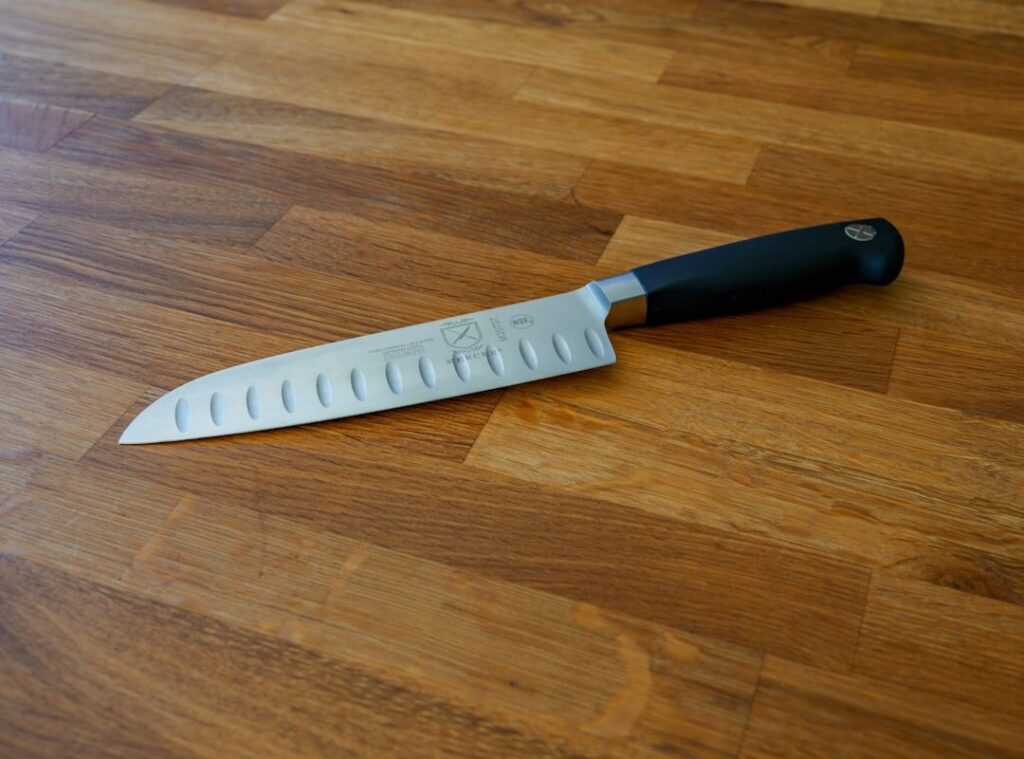
Let’s get real: all the knife skills important cuts are pointless without a sharp, well-cared-for knife. You know it, I know it. Start with one important tool (a) good 8-inch chef’s knife.
Trust me, it’s all you need as a beginner.
Now, let’s talk care. First up, honing vs. sharpening. Simple: honing realigns the edge, sharpening removes metal.
You should hone regularly to keep that edge crisp. Got it?
Next, hand-wash only. Dishwashers? They’re brutal.
The harsh chemicals and high heat are an enemy to your knife. So, do yourself a favor (hand) wash that blade.
Lastly, proper storage is a must. Throwing a knife in a drawer? Dangerous and terrible for the blade.
Use a knife block, a magnetic strip, or a blade guard. If you care about your knives, they’ll last longer and work better. It’s that simple.
Master the Art of the Knife
You’ve got this. Your goal of mastering those knife skills important cuts is right here. Remember feeling slow and clumsy in the kitchen?
Those days are over. You now know the grips and cuts, and how they change flavor and texture. This isn’t just practice; it’s a game-changer.
Start tonight. Dice an onion. It’s not a chore; it’s the beginning of your confident cooking journey.
Imagine the meals you’ll create. The confidence you’ll build. You’re set to transform your kitchen game.
So, why wait? Embrace the challenge. Start slicing, and feel the difference.
 Torvessa Druvina writes the kind of tutorial treasures content that people actually send to each other. Not because it's flashy or controversial, but because it's the sort of thing where you read it and immediately think of three people who need to see it. Torvessa has a talent for identifying the questions that a lot of people have but haven't quite figured out how to articulate yet — and then answering them properly.
They covers a lot of ground: Tutorial Treasures, Recipe Optimization Hacks, Ozvelex Fusion Cuisine Experiments, and plenty of adjacent territory that doesn't always get treated with the same seriousness. The consistency across all of it is a certain kind of respect for the reader. Torvessa doesn't assume people are stupid, and they doesn't assume they know everything either. They writes for someone who is genuinely trying to figure something out — because that's usually who's actually reading. That assumption shapes everything from how they structures an explanation to how much background they includes before getting to the point.
Beyond the practical stuff, there's something in Torvessa's writing that reflects a real investment in the subject — not performed enthusiasm, but the kind of sustained interest that produces insight over time. They has been paying attention to tutorial treasures long enough that they notices things a more casual observer would miss. That depth shows up in the work in ways that are hard to fake.
Torvessa Druvina writes the kind of tutorial treasures content that people actually send to each other. Not because it's flashy or controversial, but because it's the sort of thing where you read it and immediately think of three people who need to see it. Torvessa has a talent for identifying the questions that a lot of people have but haven't quite figured out how to articulate yet — and then answering them properly.
They covers a lot of ground: Tutorial Treasures, Recipe Optimization Hacks, Ozvelex Fusion Cuisine Experiments, and plenty of adjacent territory that doesn't always get treated with the same seriousness. The consistency across all of it is a certain kind of respect for the reader. Torvessa doesn't assume people are stupid, and they doesn't assume they know everything either. They writes for someone who is genuinely trying to figure something out — because that's usually who's actually reading. That assumption shapes everything from how they structures an explanation to how much background they includes before getting to the point.
Beyond the practical stuff, there's something in Torvessa's writing that reflects a real investment in the subject — not performed enthusiasm, but the kind of sustained interest that produces insight over time. They has been paying attention to tutorial treasures long enough that they notices things a more casual observer would miss. That depth shows up in the work in ways that are hard to fake.