
You’ve probably followed a sauce recipe before—maybe it turned out great, or maybe it fell flat. But here’s the thing: great sauce isn’t about perfect measurements. It’s about knowing how the pieces fit together.
If you’re here, you’re ready to go deeper than just another how-to. You want to learn why sauces work—how flavor, texture, and technique come together to create something unforgettable. This guide gives you just that.
We’ve spent years testing, tweaking, and tasting. Through that process, we uncovered the sauce making basics—a set of universal principles that can transform any cook into a confident sauce creator.
By the time you finish reading, you’ll understand the core building blocks behind endless varieties of sauces. No cookbook required. Just knowledge, creativity, and the freedom to improvise.
Principle #1: Build an Unforgettable Flavor Foundation
Why does some food make people stop mid-bite and whisper, “What is in this?”—while other dishes feel flat, no matter how much salt you add?
It all starts with the flavor foundation.
Let’s break it down.
Some folks swear by shortcuts—premade sauces, spice blends, even flavor drops (yes, that’s a thing now). And hey, they’re convenient. But here’s what they miss: great flavor is built, not bought.
The Maillard Reaction is Your Best Friend
Think of it as kitchen alchemy. When you brown proteins or vegetables, you’re triggering a chemical reaction that unlocks hundreds of new flavor compounds. This means meaty, toasty, rich notes start forming—which no shortcut will ever truly replicate. Skipping this? You’re not cooking, you’re just heating food.
Aromatics are Non-Negotiable
Want global flair? Build from the base. The French mirepoix (onion, carrot, celery) is classic for a reason, but head to Thailand and the trio becomes garlic, ginger, and lemongrass. Latin America has sofrito. These combos aren’t just traditional—they build character from the bottom up.
The Magic of Deglazing
Got browned bits stuck to your pan? Don’t scrub—deglaze. A splash of stock, wine, or even water lifts those golden flavor bombs (called fond) off the surface, instantly enriching your sauce. Pro tip: white wine works wonders with chicken; red deepens beef or mushroom bases.
Harnessing Umami
If your sauce feels like it’s missing something, it probably needs umami. Add a spoon of tomato paste, a glug of soy sauce, some finely chopped mushrooms, or even a parmesan rind in your broth. These umami boosters give you the illusion of complexity—the “simmered-for-hours” taste in minutes.
What’s in it for you? Complete control over how your dish tastes. Understanding how flavors layer means you can fix a bland soup, enhance a weeknight pasta, or master the art of fusion.
Mastering the sauce making basics isn’t just a skill—it’s a superpower in your kitchen.
Principle #2: Master the Art of Texture and Consistency
Let’s be honest—no one remembers a runny sauce. Or worse, one that’s gloopy and starchy (hello, gravy that doubles as wallpaper paste). Texture matters, and consistency—both in technique and mouthfeel—is everything.
Some chefs swear by complicated thickeners. Others insist nothing beats the age-old simmer. I say this: the best sauces honor both flavor and form.
Thickening Through Reduction is still the gold standard. Letting liquid slowly evaporate over low heat doesn’t just thicken—it intensifies flavor like a good plot twist. Take classic French demi-glace: there’s no fast-forward button. (And yes, your patience will be rewarded.)
A Guide to Thickeners – Classic & Modern shows just how many tools we have now. Roux is still reliable, especially for creamy béchamel or gumbo. A cornstarch slurry? Quick and easy, ideal when you’re three hangry guests away from a meltdown. But don’t overlook pureed cauliflower or cashews, especially if you’re sneaking in nutrients without losing that lush mouthfeel.
Pro tip: Blend roasted carrots into a curry sauce—it’ll add color, sweetness, and thickness. Triple win.
The Science of Emulsification is where texture becomes magic. A proper vinaigrette or aioli rides on emulsifiers like mustard or egg yolk, binding oil and water into creamy harmony. (Cue the culinary Avengers theme.)
Finishing with Fat—a cold butter swirl at the end—might sound minimal, but it’s a game-changer. It turns good into gourmet, giving your sauce gloss, richness, and luxury on a spoon.
It’s all part of the sauce making basics—and yes, texture is a flavor all its own.
Principle #3: Achieve Perfect Balance by Tasting and Adjusting
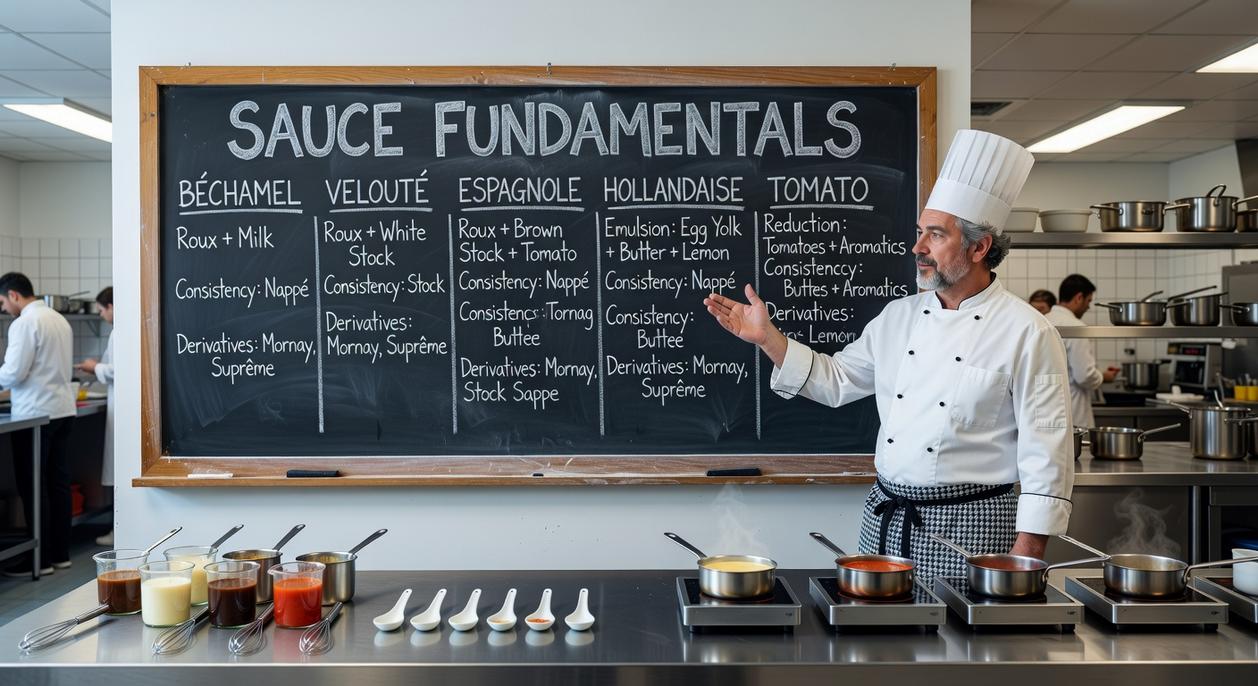
Great sauces don’t just happen—they’re built, adjusted, and refined. While some chefs follow ratios to the letter, the most flavorful results come from what happens at the very end: tasting and tweaking. That’s where the magic lives.
Some people argue you shouldn’t mess with a sauce after it’s done simmering. “It’s already cooked, why touch it?” they say. But here’s the thing—almost every professional chef does. Because even when your base is solid, the Four Pillars of Taste (salt, fat, acid, and sweetness/heat) need fine-tuning to sing in harmony.
Let’s break it down:
-
Acid is the Great Awakener: That “something’s missing” feeling? It’s probably acid. A dash of red wine vinegar or a squeeze of lemon can brighten a heavy sauce in seconds (like sunglasses for your taste buds).
-
Fat as a Flavor Carrier: From a knob of butter in béarnaise to cream in tikka masala, fat makes sauces indulgent while helping deliver flavor smoothly across the palate.
-
Sweetness or Heat: Too acidic? A tiny swirl of honey or a flick of hot sauce restores the balance.
-
Seasoning at the End: This is non-negotiable. Always taste right before serving. Even a small pinch of flaky sea salt or a touch of freshly ground black pepper can elevate a sauce from good to unforgettable.
Pro Tip: Let your sauce cool slightly before the final taste. Heat can dull your perception of salt and acid, so adjustments while it’s scalding-hot can backfire.
Need help getting everything just right at the correct temps? Learn how to use kitchen thermometers for better cooking accuracy.
In the end, sauce making basics will get you far—but balance brings brilliance.
Sauce Optimization Hacks: Pro Tips for the Home Cook
Let’s be honest—when you’re midweek tired and staring down a half-empty fridge, a good sauce can save dinner (and your sanity).
But here’s something most home cooks don’t realize: small tweaks can level up your sauces from “it’s fine” to “what is this magic?”
Here’s how to make every sauce session smarter and faster:
-
Batch and Freeze Sauce Bases
Make a big pot of a versatile tomato or mushroom sauce, then freeze it in portions. Future You will thank yourself when dinner’s ready in ten minutes. -
The Immersion Blender is Your Secret Weapon
Skip the mess of transferring hot liquids. Just blend the sauce silky-smooth right in the pot. It’s the move restaurant chefs swear by. -
How to Fix a ‘Broken’ Sauce
Don’t toss a curdled sauce. Whisk in a teaspoon of hot water—or a fresh egg yolk—for a quick save. (Serious kitchen hero move.) -
Infuse, Don’t Just Mix
Drop in herbs like thyme or rosemary and let them steep for 10–15 minutes before serving. Remove the stems, keep the flavor.
Remember: use sauce making basics but feel free to upgrade it. That’s where the magic happens.
You came here unsure of how to even begin, and now you’re walking away with the confidence to create sauces from scratch.
The mystery and intimidation that once surrounded sauce making are gone. You now understand the sauce making basics—how to build flavor, control texture, and achieve balance. These aren’t just steps; they’re the foundation of creativity in the kitchen.
When you cook with principles instead of memorized recipes, you gain real flexibility. That’s how great sauces happen—not by following rules, but by knowing how to bend them.
As you master the basics of building perfect sauces from scratch, you’ll discover how this foundational skill beautifully complements traditional practices, such as those explored in our article about What Is Food Kayudapu.
You Are Now a Sauce Architect
You’ve learned what really matters about crafting flavor—and that knowledge is yours now.
Here’s what to do next: Don’t wait for a dinner party. The next time you pan-sear some chicken or veggies, deglaze with a splash of wine, swirl in a knob of butter, and let those sauce making basics come to life.
New cooks use recipes. Sauce architects use instincts. Start simple. Taste everything. Build your flavor story.
 Torvessa Druvina writes the kind of tutorial treasures content that people actually send to each other. Not because it's flashy or controversial, but because it's the sort of thing where you read it and immediately think of three people who need to see it. Torvessa has a talent for identifying the questions that a lot of people have but haven't quite figured out how to articulate yet — and then answering them properly.
They covers a lot of ground: Tutorial Treasures, Recipe Optimization Hacks, Ozvelex Fusion Cuisine Experiments, and plenty of adjacent territory that doesn't always get treated with the same seriousness. The consistency across all of it is a certain kind of respect for the reader. Torvessa doesn't assume people are stupid, and they doesn't assume they know everything either. They writes for someone who is genuinely trying to figure something out — because that's usually who's actually reading. That assumption shapes everything from how they structures an explanation to how much background they includes before getting to the point.
Beyond the practical stuff, there's something in Torvessa's writing that reflects a real investment in the subject — not performed enthusiasm, but the kind of sustained interest that produces insight over time. They has been paying attention to tutorial treasures long enough that they notices things a more casual observer would miss. That depth shows up in the work in ways that are hard to fake.
Torvessa Druvina writes the kind of tutorial treasures content that people actually send to each other. Not because it's flashy or controversial, but because it's the sort of thing where you read it and immediately think of three people who need to see it. Torvessa has a talent for identifying the questions that a lot of people have but haven't quite figured out how to articulate yet — and then answering them properly.
They covers a lot of ground: Tutorial Treasures, Recipe Optimization Hacks, Ozvelex Fusion Cuisine Experiments, and plenty of adjacent territory that doesn't always get treated with the same seriousness. The consistency across all of it is a certain kind of respect for the reader. Torvessa doesn't assume people are stupid, and they doesn't assume they know everything either. They writes for someone who is genuinely trying to figure something out — because that's usually who's actually reading. That assumption shapes everything from how they structures an explanation to how much background they includes before getting to the point.
Beyond the practical stuff, there's something in Torvessa's writing that reflects a real investment in the subject — not performed enthusiasm, but the kind of sustained interest that produces insight over time. They has been paying attention to tutorial treasures long enough that they notices things a more casual observer would miss. That depth shows up in the work in ways that are hard to fake.