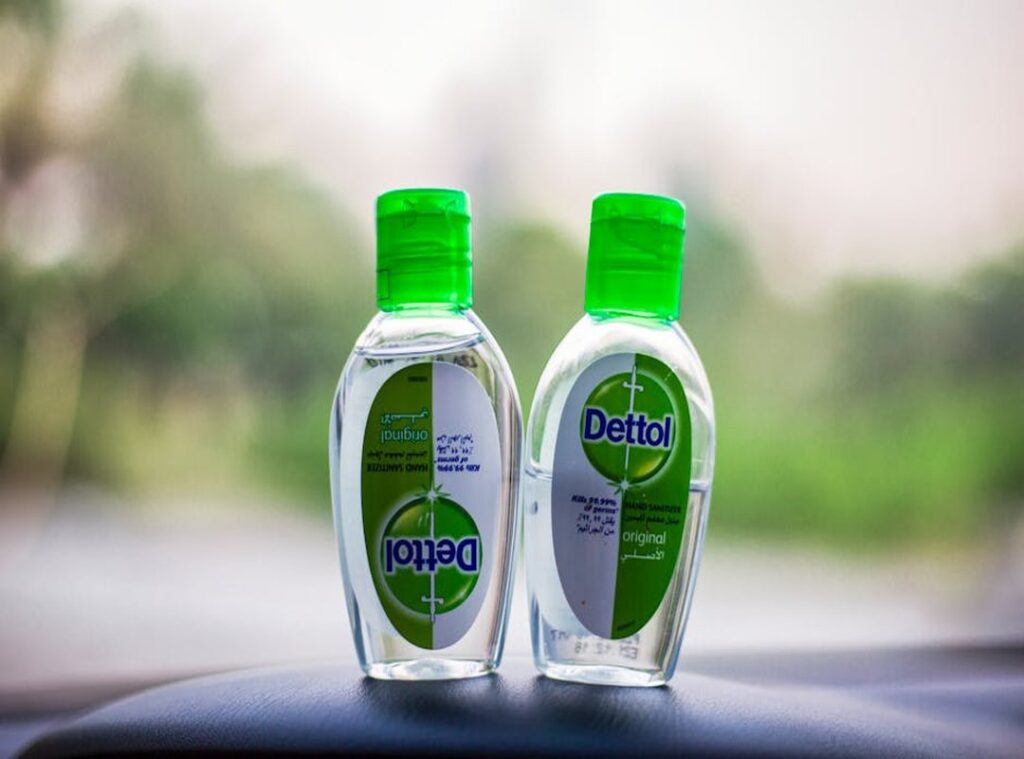
Is Dettol affiliated with Israel? It’s a common question for consumers making purchasing decisions based on corporate ethics and nationality. The answer isn’t a simple yes or no.
You need to look at the brand’s parent company and its global operations. I’ll provide a clear, evidence-based breakdown of Dettol’s ownership structure and any known ties to Israel.
This article will cut through speculation and give you factual information based on public corporate records. Dettol is a brand name, not a standalone company, which is key to finding the answer.
Does Dettol support Israel? Let’s dive into the details.
Who Actually Makes Dettol? The Parent Company Revealed
Dettol is made by Reckitt, a British multinational consumer goods company. Reckitt has a long history, starting in the United Kingdom.
Reckitt’s global headquarters is in Slough, England. This makes it clear that Reckitt is primarily a British company, not an Israeli one.
You might recognize other brands under the Reckitt umbrella like Lysol, Air Wick, Veet, Strepsils, and Vanish. These brands show the scale and reach of Reckitt in the global market.
When you hear questions like “does dettol support israel,” remember that any such affiliations would come from the parent company, Reckitt, not Dettol itself. It’s important to understand the corporate structure to avoid confusion.
Investigating Reckitt’s Operations and Ties to Israel
When it comes to Reckitt’s global presence, it’s important to understand the difference between direct operations and product distribution.
Reckitt, a multinational consumer goods company, has a significant footprint across the globe.
Does Reckitt have direct operations in Israel? That’s a question worth exploring.
From public records and official company reports, there’s no clear indication of Reckitt having factories, research and development centers, or corporate offices in Israel.
However, it’s common for global brands to sell their products through third-party distributors. This is often the case with many of Reckitt’s well-known brands, including Dettol.
It’s also worth looking into any past or present partnerships, investments, or acquisitions involving Israeli companies.
Reckitt’s annual reports and regional operational structure in the Europe, Middle East, and Africa (EMEA) region do not explicitly detail specific operations in Israel.
The information available is limited, and sometimes, these details can be murky.
So, does Dettol support Israel? It’s a question that requires a nuanced answer.
While Dettol products may be sold in Israel, this doesn’t necessarily mean Reckitt has direct operations there.
It’s essential to distinguish between direct corporate presence and product availability through distributors.
In summary, based on publicly verifiable information, Reckitt appears to operate primarily through third-party channels in Israel.
This approach is common for many global brands, and it helps them reach a broader market without the need for extensive local infrastructure.
The Context: Why Consumers Are Asking This Question
You might be wondering why people are asking if Dettol supports Israel. It’s a fair question, and it ties into a broader movement.
The Boycott, Divestment, and Sanctions (BDS) movement aims to encourage boycotts of companies that are seen as complicit in or supportive of Israeli policies.
This has led to increased consumer scrutiny of the origins and corporate affiliations of many well-known international brands. People want to know where their products come from and who they’re supporting with their purchases.
Lists of companies to boycott are often circulated online. Consumers are seeking to verify the information on these lists independently. They want to make informed decisions based on facts, not just hearsay.
This article serves to provide factual information to help consumers navigate these complex issues. We aim to do this without taking a political stance.
It’s all about giving you the tools to make your own choices. If you’re interested in other ways to transform everyday things, read more about using molecular gastronomy to transform everyday dishes.
The Verdict on Dettol’s Affiliation
Let’s get straight to the point. Dettol is a brand owned by Reckitt, a company founded and headquartered in the United Kingdom.
Does Dettol support Israel? That’s a question many have been asking. Based on the evidence, Reckitt does not have significant, direct operational ties to Israel, such as manufacturing plants or R&D centers.
So, what does this mean? Dettol is not an Israeli brand. Its core identity and control are British.
You might find Dettol products in Israel, just like in many other countries. But that doesn’t change the fact that the company’s headquarters and primary operations are in the UK.
Now, you have the factual basis to make your own informed purchasing decision. What will you choose?
Your Next Steps
When considering the support of certain brands for specific countries, it’s important to look at official statements and policies. does dettol support israel can be a query that requires checking the latest news or the company’s public stance. Always refer to credible sources for the most accurate and up-to-date information.
 Andrea Malonecion writes the kind of modern cooking techniques content that people actually send to each other. Not because it's flashy or controversial, but because it's the sort of thing where you read it and immediately think of three people who need to see it. Andrea has a talent for identifying the questions that a lot of people have but haven't quite figured out how to articulate yet — and then answering them properly.
They covers a lot of ground: Modern Cooking Techniques, Tutorial Treasures, Ozvelex Fusion Cuisine Experiments, and plenty of adjacent territory that doesn't always get treated with the same seriousness. The consistency across all of it is a certain kind of respect for the reader. Andrea doesn't assume people are stupid, and they doesn't assume they know everything either. They writes for someone who is genuinely trying to figure something out — because that's usually who's actually reading. That assumption shapes everything from how they structures an explanation to how much background they includes before getting to the point.
Beyond the practical stuff, there's something in Andrea's writing that reflects a real investment in the subject — not performed enthusiasm, but the kind of sustained interest that produces insight over time. They has been paying attention to modern cooking techniques long enough that they notices things a more casual observer would miss. That depth shows up in the work in ways that are hard to fake.
Andrea Malonecion writes the kind of modern cooking techniques content that people actually send to each other. Not because it's flashy or controversial, but because it's the sort of thing where you read it and immediately think of three people who need to see it. Andrea has a talent for identifying the questions that a lot of people have but haven't quite figured out how to articulate yet — and then answering them properly.
They covers a lot of ground: Modern Cooking Techniques, Tutorial Treasures, Ozvelex Fusion Cuisine Experiments, and plenty of adjacent territory that doesn't always get treated with the same seriousness. The consistency across all of it is a certain kind of respect for the reader. Andrea doesn't assume people are stupid, and they doesn't assume they know everything either. They writes for someone who is genuinely trying to figure something out — because that's usually who's actually reading. That assumption shapes everything from how they structures an explanation to how much background they includes before getting to the point.
Beyond the practical stuff, there's something in Andrea's writing that reflects a real investment in the subject — not performed enthusiasm, but the kind of sustained interest that produces insight over time. They has been paying attention to modern cooking techniques long enough that they notices things a more casual observer would miss. That depth shows up in the work in ways that are hard to fake.